
Can Hydrolyzed Silk Protein Repair Damaged Hair?
What Is Hydrolyzed Silk Protein, Exactly?
Silk, a natural fiber produced by silkworms, is primarily composed of fibroin—a protein rich in amino acids like glycine, alanine, and serine. Raw silk proteins are large and insoluble in water, making them unable to penetrate the hair shaft effectively. Hydrolyzed silk protein is created through a controlled hydrolysis process, which breaks down these large fibroin molecules into smaller, water-soluble peptides and amino acids.
This hydrolysis process is critical: it transforms silk from a bulky fiber into a lightweight, absorbable ingredient that can easily penetrate the hair' s layers. Unlike intact silk fibers, which only coat the hair surface, hydrolyzed silk protein' s small molecular size allows it to reach the hair' s cortex—the inner layer responsible for strength and elasticity. A study published in the journal Polymers (2023) notes that hydrolysis ensures the protein fragments retain their nutritional properties while becoming compatible with hair and skin structures.
How Does Hydrolyzed Silk Protein Repair Damaged Hair?
Damaged hair typically has two main issues: a compromised cuticle (the outer protective layer, which becomes rough and lifted) and a weakened cortex (where keratin bonds break, leading to brittleness). Hydrolyzed silk protein targets both problems through three key mechanisms, supported by Scientific research.
- Rebuilding Keratin Bonds in the Cortex
Hair is primarily made of keratin, a protein that forms strong bonds to keep strands intact. When hair is damaged—from bleaching, perming, or heat—these keratin bonds break, causing the hair to become weak and prone to breakage. Hydrolyzed silk protein has an amino acid profile similar to hair keratin, allowing it to bind to fragmented keratin chains and rebuild broken bonds.
- Sealing the Hair Cuticle
The hair cuticle is made of overlapping scales that lock in moisture and protect the cortex. Damaged cuticles have lifted scales, leading to moisture loss, frizz, and dullness. Hydrolyzed silk protein' s small peptides fill in the gaps between these lifted scales, creating a smooth, protective barrier that seals in moisture and reduces friction.
- Delivering Deep Nourishment
Hydrolyzed silk protein is rich in essential amino acids that hair needs to stay healthy. These amino acids—including serine, which helps retain moisture, and glycine, which supports strength—penetrate the hair shaft to nourish the cortex from within.
Key Properties and Advantages of Hydrolyzed Silk Protein
What makes hydrolyzed silk protein stand out from other hair repair ingredients? Its unique properties make it a versatile and effective choice for hair care, with benefits supported by research:
- Biocompatibility and Safety
Hydrolyzed silk protein is a natural, biocompatible ingredient—meaning it is well-tolerated by hair and skin and rarely causes irritation. A study in ACS Publications (2025) tested the biocompatibility of silk-derived hydrolysates on human skin and hair cells and found that they maintained cell viability at all tested doses, conFirming their safety. It is also gluten-free, non-GMO, and not tested on animals, making it suitable for a wide range of formulations.
- Dual Action: Repair and Prevention
Unlike many ingredients that only coat the hair temporarily, hydrolyzed silk protein provides both immediate and long-term benefits. It instantly smooths the cuticle for a softer, shinier appearance while working to rebuild keratin bonds over time to prevent future damage.
- Water-Solubility and Formulation Versatility
Thanks to the hydrolysis process, hydrolyzed silk protein is highly water-soluble, making it easy to incorporate into a wide range of hair care products. It is compatible with Cationic, anionic, and non-ionic ingredients, making it a flexible addition to formulations from shampoos to deep conditioners. The recommended use level is 0.5–10%, depending on the product type, ensuring it is effective without compromising product texture.
- Multifunctional Benefits
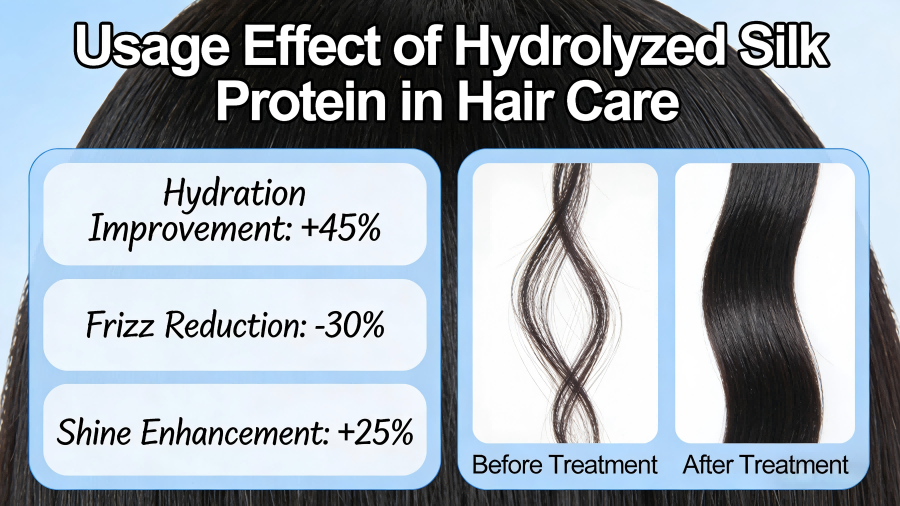
Beyond repair, hydrolyzed silk protein improves hair manageability, reduces frizz, and enhances shine. It also helps hair defend against UV damage—silk amino acids participate in photo-oxidation reactions to counteract the harmful effects of sunlight, thereby preventing dryness and color fading. A 2025 study in Biology Insights also notes its ability to enhance the penetration of other hair care ingredients, boosting the overall effectiveness of formulations.
Applications of Hydrolyzed Silk Protein in Cosmetics
Hydrolyzed silk protein is a versatile ingredient used in both hair care and skin care, but its most prominent applications are in hair care products designed for repair and nourishment. Below are its common uses in the cosmetics industry, supported by ingredient specifications and research:
- Hair Care Products
- Shampoos:Added to gentle, moisturizing shampoos to cleanse without stripping the hair of natural oils, while delivering nourishment and preparing the hair for further repair. Look for hydrolyzed silk protein in the first five ingredients for maximum effectiveness.
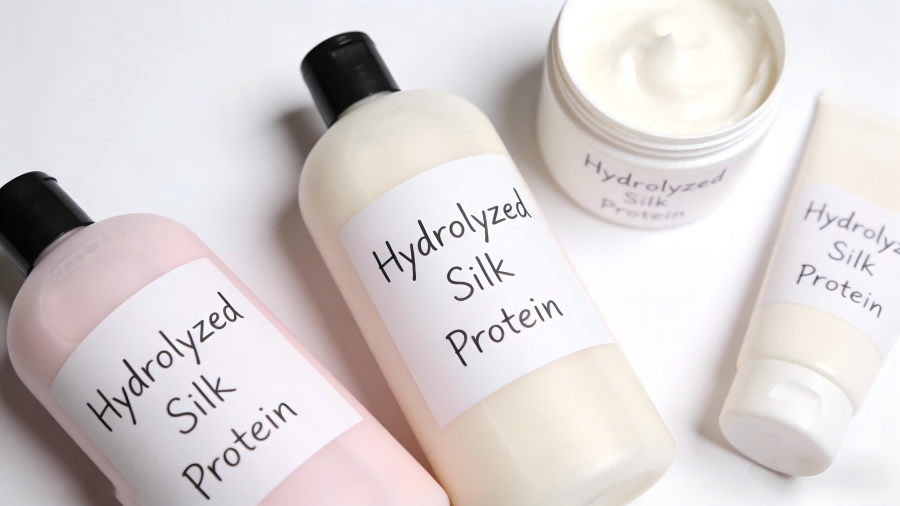
- Conditioners and Hair Masks: Deep conditioners and hair masks often contain higher concentrations of hydrolyzed silk protein (2–5%) to provide intensive repair for damaged hair. These products penetrate the hair shaft to rebuild keratin bonds and seal in moisture, ideal for post-bleaching or perming care.
- Leave-In Treatments:Leave-in serums and creams use hydrolyzed silk protein to provide ongoing protection against heat and environmental damage. Its lightweight formula does not weigh hair down, making it suitable for all hair types, including fine hair.
- Skin Care Products
While this article focuses on hair repair, hydrolyzed silk protein is also widely used in skin care for its moisturizing and anti-aging benefits. It acts as a humectant, drawing moisture from the air to keep skin supple, and forms a protective film to reduce fine lines.
Conclusion: Hydrolyzed Silk Protein Can Repair Damaged Hair
The science is clear: hydrolyzed silk protein is an effective ingredient for repairing damaged hair. Its unique molecular structure allows it to penetrate the hair shaft, rebuild broken keratin bonds, seal the cuticle, and deliver deep nourishment—all supported by peer-reviewed research and industry studies. Unlike temporary fixes that only coat the hair, hydrolyzed silk protein provides long-term repair, strengthening hair from the inside out while preventing future damage.
Name: Yuki
E-mail: sales02@nahanutri.com
WhatsApp:+8618066950297