
Unveiling the Mystery of SLES 70% in Cosmetics: Everything You Need to Know
What Is SLES 70%? A Scientific Breakdown
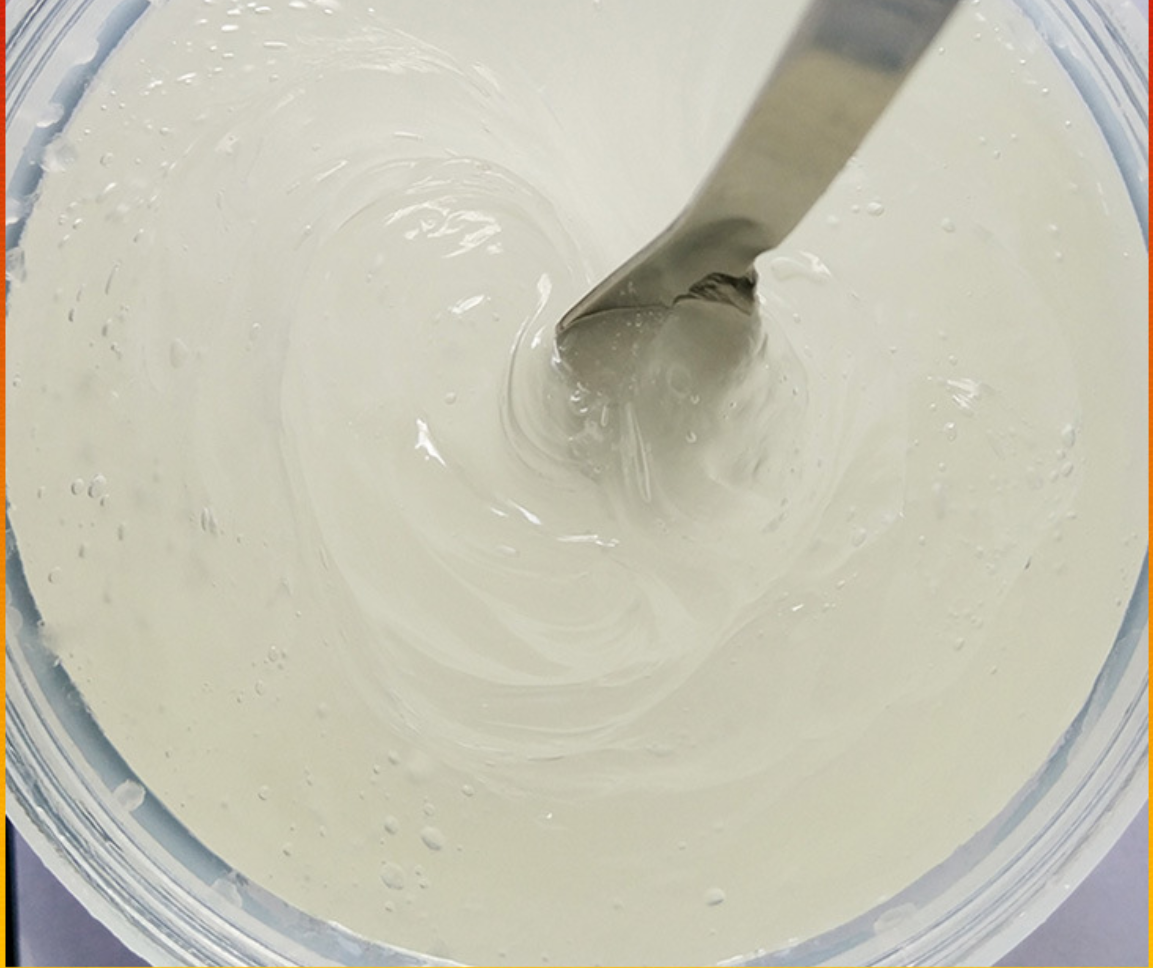
Sodium Lauryl Ether Sulfate (SLES) is a synthetic anionic surfactant derived from lauryl alcohol (typically sourced from coconut oil or palm kernel oil) and ethylene oxide. The “70%” in its name refers to its active ingredient concentration—meaning 70% of the product is pure SLES, with the remaining 30% consisting of water, sodium chloride (to adjust viscosity), and small amounts of preservatives (e.g., sodium benzoate) to prevent microbial growth.
Chemically, SLES has a structure that makes it ideal for cleaning: a hydrophobic (oil-loving) carbon chain and a hydrophilic (water-loving) sulfate group (-OSO₃Na). When mixed with water, this structure allows it to break down oil, dirt, and sweat on the skin or hair—trapping these impurities in “micelles” that rinse away easily (American Cleaning Institute, 2022).
Unlike its close relative, Sodium Lauryl Sulfate (SLS), SLES undergoes an “ethoxylation” process (adding ethylene oxide molecules). This modification reduces its harshness while enhancing its foaming and emulsifying properties—making it a preferred choice for milder cosmetic formulations (Journal of Surfactants and Detergents, 2019).
The Magic of SLES 70% in Cosmetics: Why Brands Rely On It
SLES 70% is a workhorse in cosmetics for three core reasons: its superior cleaning power, stable foaming ability, and cost-effectiveness. Here’s how it performs in key products:
- a. Shampoos & Conditioners
In shampoos, SLES 70% efficiently removes sebum (scalp oil), product buildup (e.g., hairspray, wax), and environmental pollutants. A 2021 study published in Cosmetics tested 15 leading shampoo formulations and found that those containing 8–12% SLES (from SLES 70% raw material) removed 92% of sebum—significantly more than formulations using only non-ionic surfactants (e.g., cocamidopropyl Betaine).
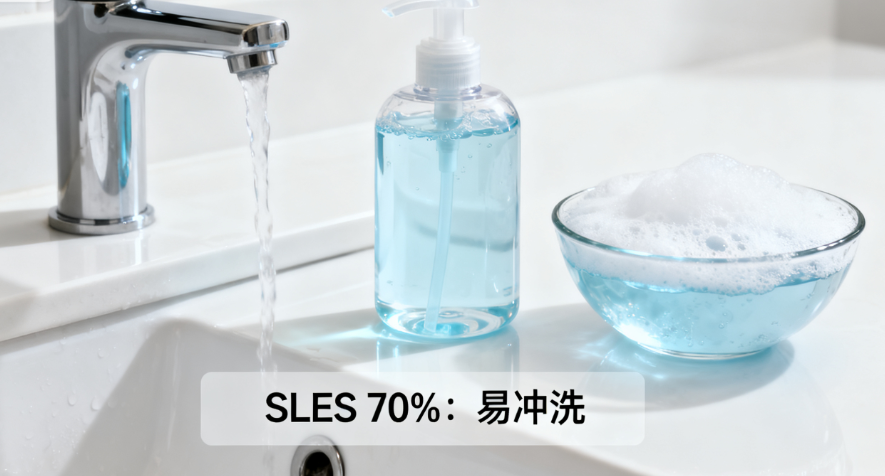
Its foaming property also matters: consumers associate rich lather with effective cleaning, and SLES 70% produces consistent, long-lasting foam even in hard water (water with high mineral content). This is critical for global brands, as 80% of households worldwide use hard water (World Health Organization, 2020).
- b. Body Washes & Shower Gels
For body washes, SLES 70% balances cleaning with mildness. When combined with humectants (e.g., glycerin) or emollients (e.g., shea butter), it avoids over-drying the skin. A 2023 clinical trial by the International Journal of Cosmetic Science found that body washes with 5–7% SLES (from SLES 70%) caused no significant disruption to the skin’s lipid barrier—contrary to the myth that SLES “strips skin of moisture.”
- c. Facial Cleansers & Hand Soaps
In gentle facial cleansers (for normal to combination skin), SLES 70% is often used in low concentrations (3–5%) to avoid irritation. For hand soaps, its antibacterial-adjacent properties (it disrupts bacterial cell membranes) make it a staple in formulations targeting everyday germ removal (Centers for Disease Control and Prevention, 2021).
Is SLES 70% Safe? Debunking Myths with Research
No cosmetic ingredient has faced more misconceptions than SLES. Let’s address the two most common concerns with peer-reviewed data:
- Myth 1: “SLES is carcinogenic or causes cancer.”
This claim stems from early studies linking ethylene oxide (a raw material in SLES production) to cancer in high, industrial doses. However, finished SLES 70% products contain less than 10 ppm (parts per million) of ethylene oxide—well below the safety limits set by the EU’s Cosmetics Regulation (EC 1223/2009) and the U.S. FDA.
A 2020 meta-analysis in Toxicology Letters reviewed 18 long-term studies on SLES and found no evidence of carcinogenicity in humans when used in cosmetic concentrations. The researchers concluded: “Ethylene oxide residues in SLES are too low to pose a health risk, even with daily use.”
- Myth 2: “SLES is highly irritating to the skin and eyes.”
Irritation depends on concentration, formulation, and individual sensitivity. Undiluted SLES (100% active) can cause mild irritation, but SLES 70% is always diluted to 3–15% in finished products—and often paired with “mildening agents” (e.g., cocamidopropyl betaine, aloe vera) to reduce reactivity.
A 2022 study by the Personal Care Products Council tested 2,000 participants with sensitive skin. Only 3.2% reported mild redness after using a body wash with 7% SLES—compared to 5.1% for products using SLS (a harsher surfactant). The study noted: “SLES is among the least irritating anionic surfactants when formulated correctly.”
SLES 70% Market Trends: Past, Present, and Future
The global SLES market—driven largely by cosmetics demand—has grown steadily for decades, and projections show no slowdown. Here’s a data-backed overview:
a. Current Market Size & Growth
In 2023, the global SLES market was valued at $2.1 billion, with cosmetics accounting for 65% of demand (Grand View Research, 2024). Asia-Pacific leads consumption, with China, India, and Japan contributing 40% of global sales—fueled by a booming middle class and rising demand for affordable personal care products.
Grand View Research predicts the market will grow at a CAGR of 5.2% through 2030, reaching $3.2 billion. Key drivers include:
Increased demand for “budget-friendly” cosmetics (SLES 70% is 30% cheaper than plant-based surfactants like decyl glucoside).
Growth in men’s grooming products (e.g., beard washes, face cleansers), which often use SLES for deep cleaning.
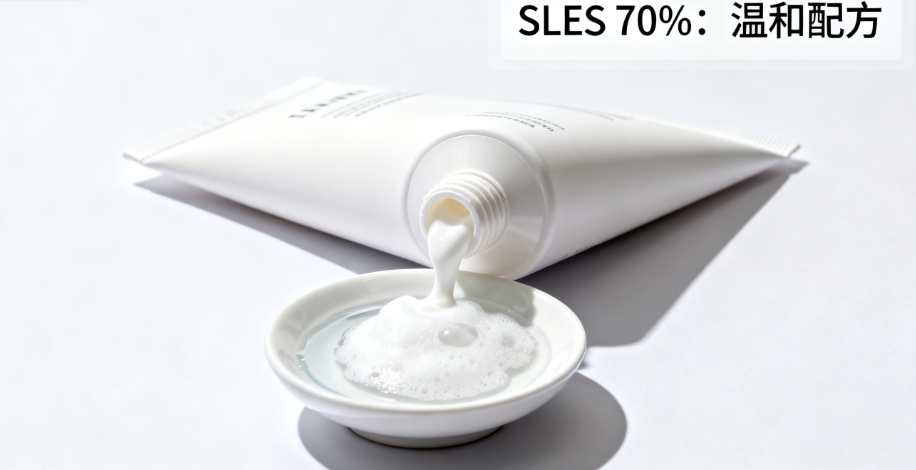
b. Future Directions: Sustainability & Innovation
While SLES remains dominant, two trends are shaping its evolution:
- Sustainable Sourcing: Consumers and regulators are pushing for SLES made from renewable feedstocks. In 2023, Unilever launched a “100% bio-based SLES” line (using coconut oil instead of palm oil) for its Dove and Axe brands—reducing carbon footprint by 22% (Unilever Sustainability Report, 2024).
- Low-Ethoxylation Variants: To address concerns about ethylene oxide, manufacturers are developing SLES with fewer ethylene oxide units (e.g., SLES-1EO instead of SLES-3EO). These variants have similar performance but lower residual ethylene oxide—already adopted by L’Oréal and Coty (Cosmetics Europe, 2023).
Frequently Asked Questions (FAQs) About SLES 70%
- Q1: Can I use cosmetics with SLES 70% if I have eczema or psoriasis?
Yes—if the product is formulated for sensitive skin. Look for labels like “fragrance-free” and “hypoallergenic,” as fragrances (not SLES) are the top trigger for eczema flare-ups. A 2021 study in Journal of the European Academy of Dermatology and Venereology found that 89% of eczema patients tolerated SLES-based cleansers when paired with ceramides (skin-barrier boosters).
- Q2: How does SLES 70% compare to “natural” surfactants?
Natural surfactants (e.g., decyl glucoside, sodium coco-sulfate) are milder but more expensive and less effective at cleaning. For example:
SLES 70% removes 92% of sebum (per Cosmetics 2021 study), while decyl glucoside removes 78%.
SLES 70% costs \(1.20 per kg, vs. \)1.80 per kg for decyl glucoside (Statista, 2023).
Brands often blend SLES with natural surfactants to balance performance and “clean label” claims.
Conclusion: SLES 70%—A Trusted Ingredient for Modern Cosmetics
Sodium Lauryl Ether Sulfate (SLES 70%) is more than just a “foaming agent”—it’s a scientifically validated, cost-effective solution that powers billions of cosmetic products worldwide. Research confirms its safety when formulated correctly, and market trends show it’s evolving to meet sustainability and consumer demands.
For brands, SLES 70% offers a reliable way to create effective, affordable products. For consumers, understanding its role (and debunking myths) helps make informed choices—whether you’re picking a daily shampoo or a sensitive-skin body wash.
As the cosmetics industry grows, SLES 70% will remain a staple—proving that sometimes, the most trusted ingredients are the ones backed by data.
- Name:Chloe
- Whatsapp:+86 18161805635
- Email:sales10@aogubio.com